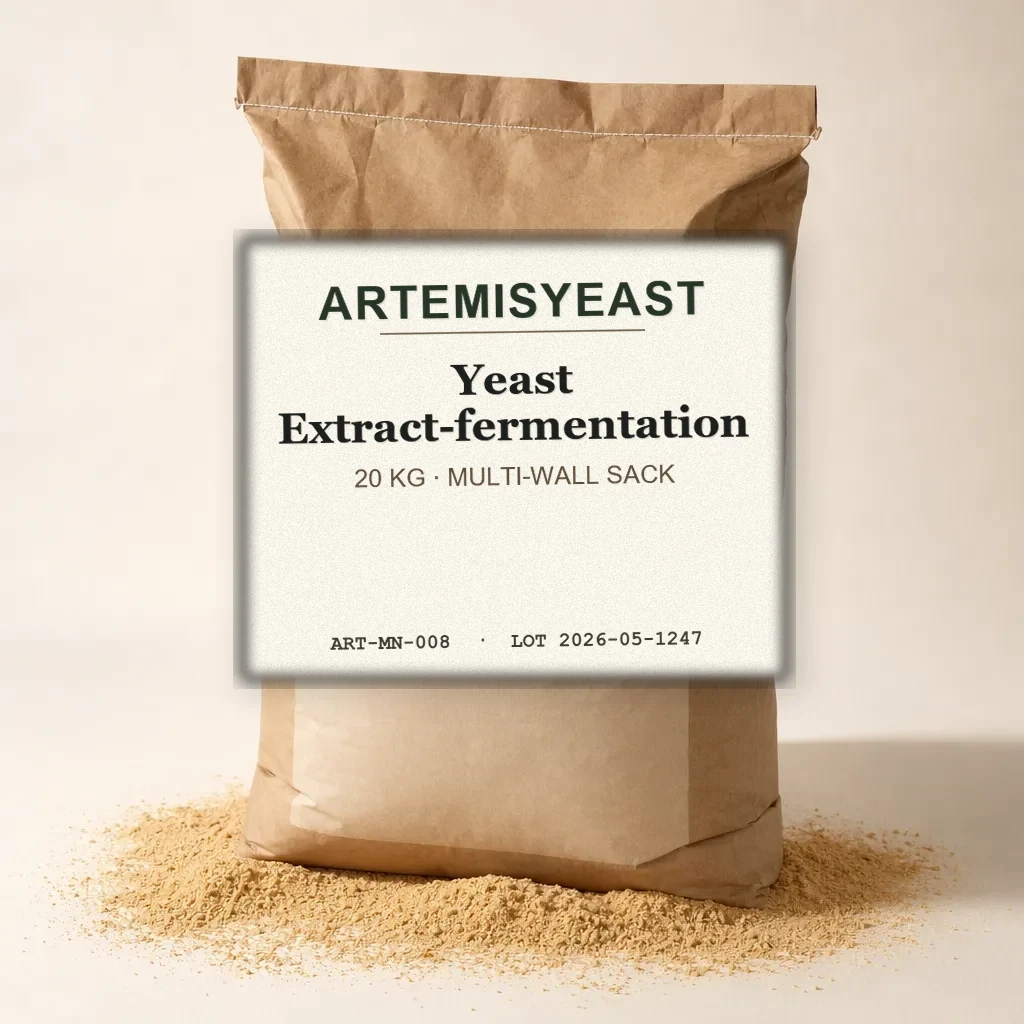
Yeast Extract for Fermentation
Yeast extract for fermentation is a water-soluble yeast-derived nutrient powder used as an organic nitrogen, peptide, vitamin, and growth-factor source for microbial and upstream bioprocess media. ART-MN-009 is supplied in 20 kg multi-wall sacks for industrial users formulating bacterial, yeast, fungal, and cell culture media. ArtemisYeast supports inquiry-only supply with wholesale pricing on request, lot documentation, and export coordination for qualified bulk buyers.
- ✓ Free worldwide shipping
- ✓ ISO-aligned manufacturing
- ✓ Certificate of Analysis on request
- ✓ Bulk & custom volumes quoted on request
Overview
ART-MN-009 is a spray-dried yeast extract designed for fermentation media where consistent nutrient contribution, fast dispersion, and low insoluble matter are required. It is produced from food-grade yeast biomass by controlled autolysis or hydrolysis, then clarified, concentrated, and dried to a free-flowing powder. The product contributes amino nitrogen, peptides, nucleotides, B-group vitamins, minerals, and growth factors that support robust biomass formation and metabolite production in industrial microbial systems.
Typical specification targets include moisture ≤6.0%, crude protein 60–70% on dry basis, total nitrogen 9–12%, amino nitrogen 3–6%, ash 8–15%, pH 5.0–7.0 in solution, and high water solubility with low sediment after dissolution. Particle size is commonly fine powder, about 60–80 mesh, suitable for dry blending or direct tank addition. Actual values are confirmed by certificate of analysis for each lot. For related media inputs, review the microbial nutrition and fermentation category.
Applications
- Microbial fermentation: organic nitrogen and micronutrient source for bacteria, yeast, and filamentous fungi used in enzyme production, amino acid fermentation, organic acid production, starter culture manufacture, and specialty ingredient fermentation.
- Biopharma upstream process development: nutrient component for non-animal-origin media strategies, seed train optimization, microbial expression systems, and cell culture media where a complex yeast-derived hydrolysate is specified by the buyer’s formulation team.
- R&D to plant scale transfer: supports screening of yeast extract concentration, nitrogen balance, C:N ratio, dissolved oxygen demand, pH control behavior, foam tendency, and sterilization compatibility before larger scale procurement.
- Media premix manufacturing: suitable for dry premixes when combined with peptones, sugars, salts, buffers, antifoam carriers, or trace nutrient blends, subject to buyer validation for flowability and segregation.
- Procurement programs: supplied as 20 kg multi-wall sacks for palletized orders, repeat lots, and export shipments. For allocation, documentation, and lead time confirmation, use the bulk quote on request workflow.
Storage and Handling
Store unopened sacks in a cool, dry, well-ventilated warehouse, protected from direct sunlight, condensation, strong odors, and floor moisture. Recommended storage is below 25°C with relative humidity controlled where possible. Under recommended conditions, typical shelf life is 24 months from manufacture; the lot label and CoA govern the exact date.
After opening, reseal promptly or transfer to a clean, dry, closed container. Avoid inhalation of dust during charging and use local extraction or appropriate plant PPE according to site procedures. The powder disperses readily in water; for sterile media, validate heat treatment or filtration strategy against your process requirements.
Quality and Documentation
ArtemisYeast supplies ART-MN-009 for industrial B2B use with lot-based traceability and specification review before shipment. Available documentation may include certificate of analysis, product specification, allergen statement, non-animal-origin statement where applicable, material safety data sheet, and food-grade declaration. HACCP-aligned manufacturing information and ISO 22000, FSSC 22000, Halal, or Kosher documentation can be requested when supported by the producing site and selected lot.
Routine quality checks typically cover appearance, odor, moisture, nitrogen profile, pH, ash, solubility, heavy metals, and microbiological limits such as total plate count, yeast and mold, coliforms, and specified pathogens. Buyers running regulated or high-sensitivity fermentation should request pre-shipment documentation and approve test methods in writing. More information on supplier controls is available at quality and documentation.
About this product
What is the typical shelf life?
Do you offer documentation (CoA, food-grade declaration)?
What is the minimum order quantity?
Is bulk pricing available?
How is this product shipped internationally?
More from Microbial Nutrition & Fermentation
Yeast Powder for Industrial Fermentation Nutrition
Microbial nutrition input — yeast powder-fermentation for industrial fermentation, cell culture, and biopharma upstream.
Bio-Agriculture Microbial Nutrition Input, 20 kg Sack
Microbial nutrition input — bio-agriculture for industrial fermentation, cell culture, and biopharma upstream.
Bio-Chemistry Fermentation Nutrient Blend ART-MN-003
Microbial nutrition input — bio-chemistry for industrial fermentation, cell culture, and biopharma upstream.
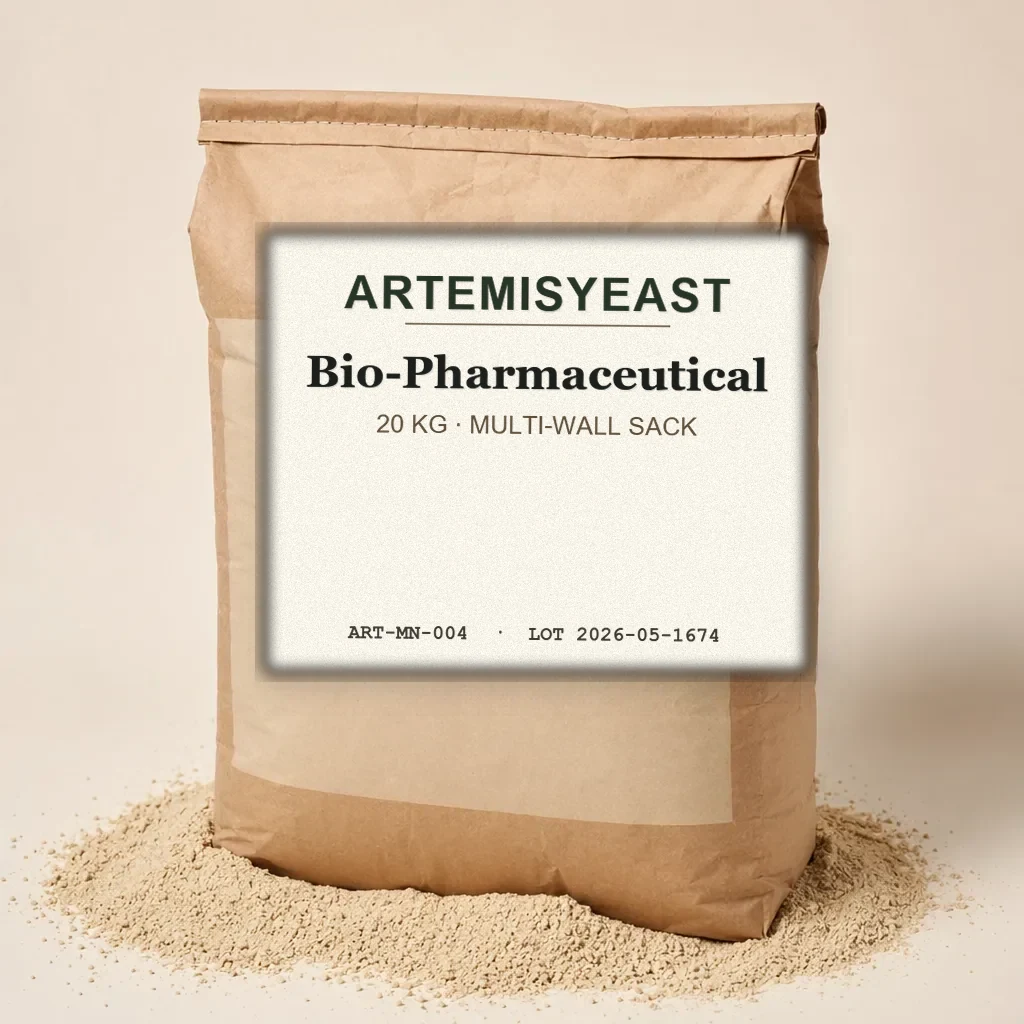
Bio-Pharmaceutical Microbial Nutrition Input, 20 kg
Microbial nutrition input — bio-pharmaceutical for industrial fermentation, cell culture, and biopharma upstream.