Fermentation Ectoin for Supplements
Fermentation ectoin is a high-purity biosynthetic amino acid derivative produced by controlled microbial fermentation for use as an ingredient in dietary supplement, cosmetic, and functional food formulations. ArtemisYeast supplies ART-BS-004 in 5 kg foil pouches for B2B buyers requiring defined identity, lot documentation, and consistent handling. This inquiry-only product is available for wholesale pricing on request, with specifications, regulatory support documents, and export packing details provided during quotation.
- ✓ Free worldwide shipping
- ✓ ISO-aligned manufacturing
- ✓ Certificate of Analysis on request
- ✓ Bulk & custom volumes quoted on request
Overview
ART-BS-004 is fermentation-produced ectoin intended for dietary supplement applications where a defined, non-animal, biosynthetic ingredient is required. Ectoin is a cyclic amino acid derivative commonly selected by R&D teams for osmolyte-based positioning, premium capsule blends, sachet powders, beverage premixes, and cosmetic ingestible concepts. The product is manufactured through controlled fermentation followed by downstream purification, crystallization, drying, sieving, and metal-detectable packing controls. For related fermentation ingredients, buyers can review the biosynthetic fermentation category.
Typical specification targets include white to off-white crystalline powder, assay not less than 98.0% by HPLC on dried basis, loss on drying not more than 1.0%, residue on ignition not more than 0.5%, pH 5.0-8.0 in aqueous solution, and practical water solubility for premix processing. A typical particle size range is 80 mesh pass, with adjusted sieving available subject to production review. Microbiological limits commonly specified for supplement use include total plate count not more than 1,000 CFU/g, yeast and mold not more than 100 CFU/g, and absence of common indicator pathogens in the tested sample size. Heavy metal limits, residual solvent profile, and allergen statements are confirmed by lot documentation and customer market requirements.
Applications
- Dietary supplements: suitable for capsules, tablets, stick packs, and powder blends where a fermentation-derived ectoin ingredient is specified. Formulators should validate dose level, label language, and finished-product stability according to the target country.
- Functional food and beverage concepts: can be evaluated in dry premixes, instant beverage powders, and soluble granule systems. Processing teams should confirm compatibility with acids, minerals, flavors, sweeteners, and heat exposure during pilot trials.
- Cosmetic and nutricosmetic programs: applicable for brands developing ingredient stories around purified fermentation molecules and science-led formulation architecture. Cosmetic use levels and INCI or local ingredient naming should be checked against the intended market.
- Contract manufacturing: supplied in 5 kg foil pouches for weighing-room control, batch traceability, and manageable inventory rotation. For commercial volumes, submit target specification, annual forecast, and destination port through request a bulk quote.
Storage and Handling
Store unopened pouches in a cool, dry, well-ventilated warehouse at 15-25°C, protected from direct sunlight, high humidity, and strong odors. Keep the inner liner sealed after partial use and avoid repeated exposure to ambient moisture during dispensing. Under recommended storage conditions, typical shelf life is 24 months from manufacture, subject to the confirmed certificate of analysis for each lot.
Use standard food or supplement ingredient handling practices: clean utensils, controlled weighing, dust management, and segregation from incompatible materials. The powder should be added into dry blends after high-shear milling steps where possible to reduce unnecessary mechanical exposure. For liquid systems, disperse into purified water or the chosen carrier with moderate agitation, then assess clarity, pH, and stability in the finished formulation. Palletization, carton configuration, and export marks can be aligned with buyer receiving requirements during order confirmation.
Quality and Documentation
ArtemisYeast supplies ART-BS-004 for professional formulators and procurement teams that require traceable ingredient control. Each commercial lot can be supported with a certificate of analysis covering identity, assay, moisture or loss on drying, microbiology, and agreed contaminant parameters. Additional documents may include specification sheet, safety data sheet, flow chart, allergen statement, non-animal origin statement, food-grade declaration, and country-of-origin information.
Manufacturing and packing controls are managed under food-safety-oriented quality systems with HACCP-aligned procedures. Documentation for ISO 22000, FSSC 22000, Halal, Kosher, or other market-specific requirements is available on request where applicable to the production lot and supply route; customers should confirm mandatory documents before issuing a purchase order. ArtemisYeast recommends pre-shipment review of specification limits, test methods, language requirements, and consignee import documents. Learn more about supplier controls and document review at quality and documentation.
About this product
What is the typical shelf life?
Do you offer documentation (CoA, food-grade declaration)?
What is the minimum order quantity?
Is bulk pricing available?
How is this product shipped internationally?
More from Biosynthetic Fermentation Ingredients
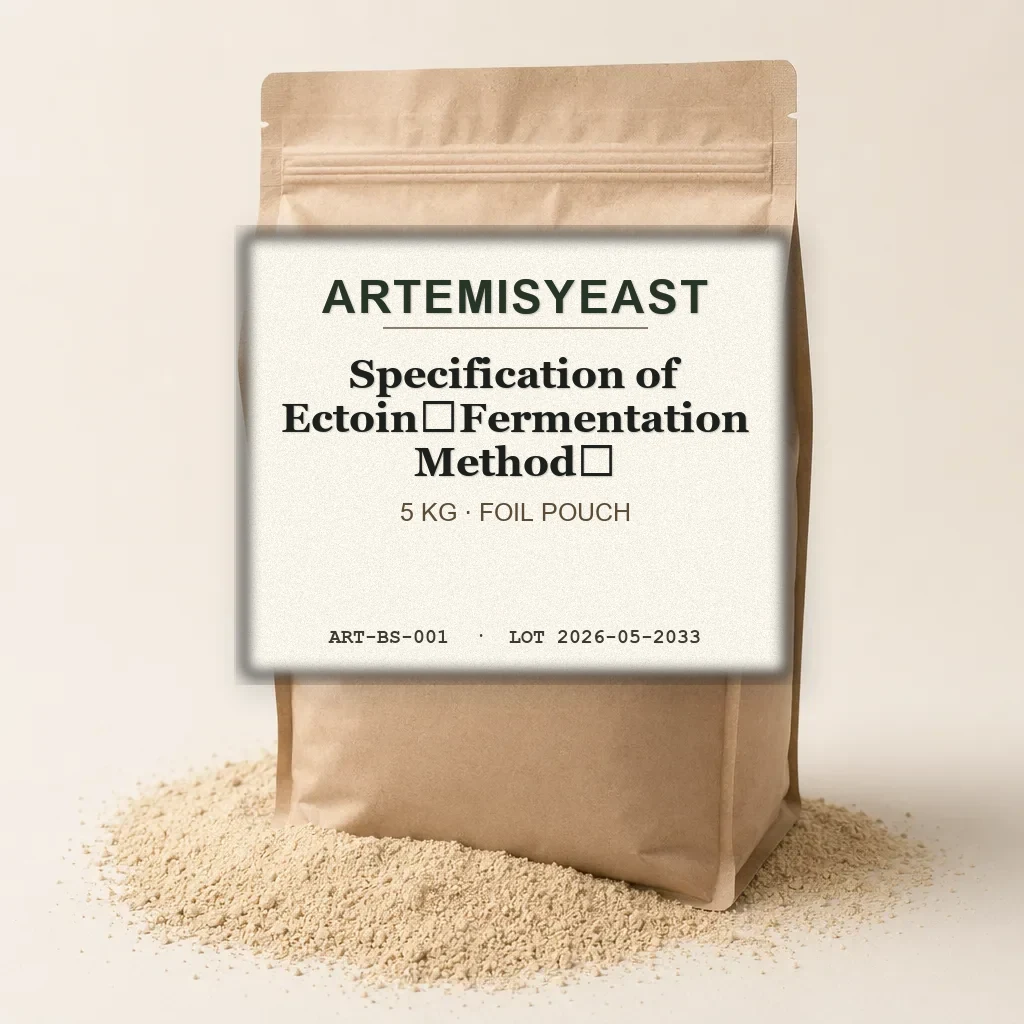
Ectoin Fermentation Ingredient for Bulk Formulation
Fermentation-produced biosynthetic ingredient — specification of ectoin(fermentation method) for cosmetics, supplements,…
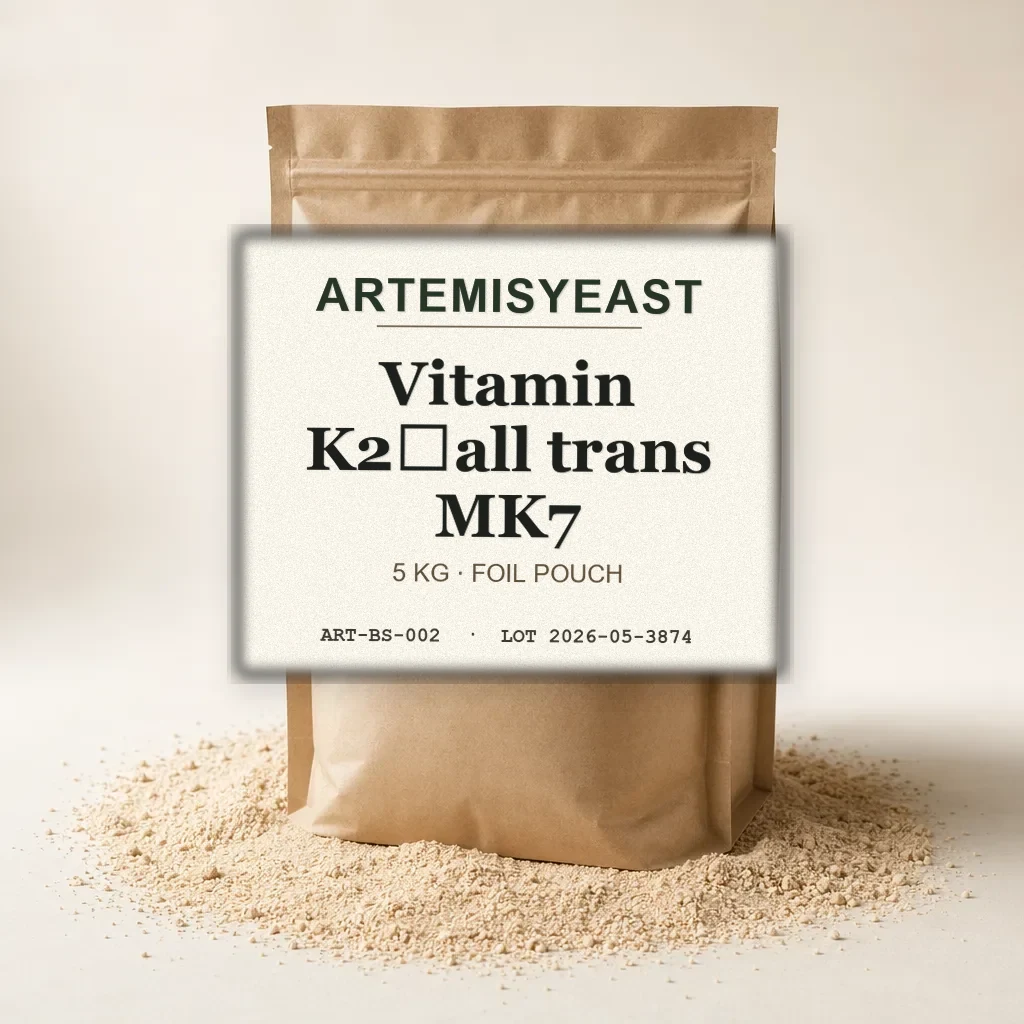
All-Trans Vitamin K2 MK-7 Fermentation Ingredient
Fermentation-produced biosynthetic ingredient — vitamin k2(all trans mk7 for cosmetics, supplements, and functional food…
Fermentation Ectoin for Cosmetic Active Ingredients
Specification of Ectoin(Fermentation Method) for cosmetics active ingredients applications. Fermentation-produced biosyn…
All-Trans Vitamin K2 MK7 Cosmetic Active Ingredient
Vitamin K2(all trans MK7 for cosmetics active ingredients applications. Fermentation-produced biosynthetic ingredient —…